Decentralized Justice in Football: An Operational Framework for Integrating KlerosMechanism and Artificial Intelligence with Virtual Assistant Referee Protocol.
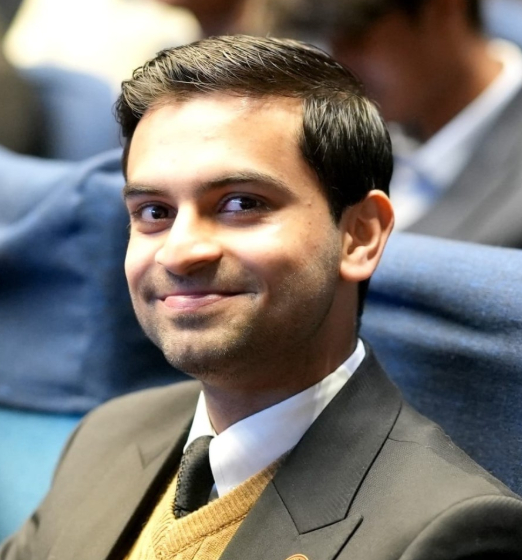
Author: Muhammad Ayaan Shehryar
A question before reading this blog: Have you ever watched a referee make a call and felt the whole stadium could see it better than he could?
That feeling sits at the heart of one of football’s longest arguments. The Video Assistant Referee (VAR) was meant to end it. It has not. The complaints have only changed shape. This piece walks through a fresh idea taken from a recent research report. The proposal is to borrow a decision-making system built on blockchain, called Kleros, and let a trained crowd help decide the moments that change matches. The thought is not new. Back in 2014, Federico Ast asked a deceptively simple question in his essay on a “Crowdreferee”. We already trust human judgment. So why limit that judgment to one referee, when it could be shared by thousands?
Before we get to the crowd, we need two pieces of the puzzle. What VAR actually does, and what a blockchain has to do with a penalty box. Both are simpler than they sound.
First, what does VAR really do, and what is it even allowed to touch?
VAR is a small team of officials watching the match from a video room. They study footage from many camera angles and flag clear mistakes to the referee on the pitch, as the official explainers from the Olympics describe. Crucially, VAR is not allowed to review everything. Under the IFAB protocol, it can step in for only four things, i.e., a goal or no goal, a penalty or no penalty, a straight red card, and mistaken identity when the wrong player gets booked. The referee can walk to the screen and review the clip himself, or simply accept the advice. Either way, the final decision stays with the official on the field. In theory, this design wipes out the obvious howlers. In practice, it has produced a new generation of arguments. We will come back to those.
Second, what is Kleros, and why does it involve a blockchain at all?
Picture a dispute that a computer cannot settle on its own. Did a freelancer deliver good work? Did a certain event really happen by a certain date? Questions like these need judgment, not just code. Kleros is a way to answer them without a judge and without a company in charge. It runs on Ethereum, a public blockchain, and it settles the question by handing it to a group of ordinary people called jurors.
Here is the clever part, and it is gentler than the jargon suggests. To take part, a juror places a deposit, in the form of tokens. The system then shows that juror a question and asks for a vote. But notice what they are asked. They are not told to vote for whatever feels fair to them personally. They are told to vote for the answer they believe most other reasonable jurors will choose.
Think of an old puzzle. Imagine you must meet a stranger somewhere in a vast city on a given day, but you have no way to agree where in advance. Where do you go? Most people pick the same famous landmark at noon, simply because it is the obvious choice that the other person is also likely to pick. Kleros runs on exactly that instinct. The obvious, defensible answer becomes the natural meeting point for honest jurors, and the rewards do the rest. Vote with the majority and you earn a fee, plus a slice of the deposits forfeited by those who voted the other way. Vote against the majority and you lose part of your own deposit. Honesty quietly becomes the profitable move, and nobody needs to sit at the top enforcing it. The team behind the platform argues at length that this is precisely what makes the system fair.
This is not a thought experiment alone. Kleros has already been used to settle real, public questions. In one famous case, the jurors decided whether Joe Biden would win the 2020 United States election. In another, they ruled on whether the country would record a thousand reported COVID deaths in a single day. In each one, hundreds of people staked tokens, voted independently, and the majority answer became the verdict.
The classic teaching example is even more down to earth. Alice hires Bob to build a website. Bob delivers it, Alice says the quality is poor, and they cannot agree. The dispute goes to Kleros. Jurors are picked at random from everyone who has staked tokens, they watch the evidence, and they vote for the outcome they expect the majority of sensible jurors to reach. The losing party can appeal, which simply summons a larger jury for another round. For complicated contracts this layered, multi-round design matters. For football, the report imagines something leaner: a single, large, final vote, delivered fast, with no drawn-out appeals.
That is the toolkit. Now to the problem it is meant to solve is as follows:
Third, if VAR was built to end the arguments, why are we still arguing?
For most of football’s history, the great controversies came from things the referee simply could not see. Think of Thierry Henry’s handball that knocked the Republic of Ireland out of the 2010 World Cup, an incident the BBC still revisits years later, or Frank Lampard’s shot against Germany that same summer, which crossed the line by a clear margin and was waved away, a miss so glaring that it dragged the sport toward goal-line technology. These were failures of sight.
VAR was the answer. So did it deliver? A large study that pooled data from more than nine thousand matches found something striking. The number of goals per match barely moved between the pre-VAR and post-VAR eras, with a difference so small it amounted to noise, as the meta-analysis reports. The technology changed how we argue, not whether we argue.
The 2022 World Cup put the new shape of the problem on display, and a single tournament gives us three clean examples. In Japan v. Spain, a contested goal was allowed to stand because the cameras could not prove the ball had crossed the line, even after a long review, and the footage was only released to the public hours later. It can be termed as the problem of unclear evidence. In Poland v. Argentina, when Argentina won a penalty against Poland, the referee first said no, then reversed himself after watching the monitor. That can be termed as interpretive drift, where the very same footage yields two opposite calls. In Croatia v. Belgium, Croatia lost a penalty against Belgium, because a player’s sleeve, not his head, body, or foot, sat offside by a sliver, a margin made visible by semi-automated offside technology. It can be termed as the over-precision paradox, where the machine is so exact that it punishes something the rule was never written to catch.
Was the offside law ever meant to police a shirt sleeve? This is the report’s sharpest point. A camera can capture an event in perfect detail and still fail to tell you how to judge it. The gap is not a failure of technology. It is a failure of agreement about how the rules should be read.
Fourth, can a crowd close that gap? And would a machine do any better?
The researchers ran two experiments to find out. In the first experiment, people were shown a real but disguised incident and asked to choose from clear options, such as no penalty, a foul and a yellow card, or a foul and a red card. They were told their reward depended on matching a panel of five hundred jurors, exactly the Kleros incentive. The result was encouraging. Pushed to predict the sensible majority rather than vent a personal opinion, people reasoned their way toward a coherent, defensible verdict.
The second experiment swapped people for machines. Three AI systems, Gemini, ChatGPT, and Claude, were each asked to judge two famous incidents on their own, with no knowledge of what the others decided. On the Lampard goal, in the 2010 World Cup, a plain question of fact, all three agreed the ball was in. But on the messy collision between goalkeeper Manuel Neuer and striker Gonzalo Higuaín in the 2014 final, they split. Two saw a foul. One did not. The lesson is the one that matters most for everything that follows. AI is dependable when the question is factual and yes-or-no. It drifts the moment the question calls for judgment, in precisely the way human officials drift.
So a clean dividing line appears. Facts on one side, judgment on the other.
Fifth, if a crowd can judge well, how could it ever fit inside ninety anxious minutes of football?
The report proposes two models, both engineered to live inside the clock. A recent upgrade to Kleros makes them realistic. It introduced Soulbound Tokens, which are badges that cannot be bought or sold and are handed only to vetted experts. That single change means the “crowd” need not be random strangers. It can be a curated pool of former referees, qualified instructors and seasoned analysts.
The first model is purely human. When a contentious moment falls into one of VAR’s four categories, the referee pauses play, much like a normal VAR check, for no more than ninety seconds. The system randomly selects a panel, perhaps ninety-nine people, from the expert pool. They watch the clip on a secure screen and tap a simple choice, penalty or no penalty. Vote in time and with the majority, and you are rewarded. Vote too late, and you forfeit your stake. The majority verdict travels straight to the referee, who applies it. The money is settled after the final whistle, so the financial machinery never slows the game.
The second model is a hybrid, and it is the more elegant of the two. Every reviewable incident first passes through several AI systems. If they all agree on a clear fact, such as the ball crossing the line, that answer goes to the referee at once. But if the machines disagree, that disagreement itself becomes the trigger. The case is bumped up to the human expert panel for the final word. In other words, the machines settle the easy factual calls in an instant, and they automatically raise their hand on the hard, subjective ones so that people can decide. The dividing line from the experiment becomes the switch that routes each decision to whoever is best suited to make it.
Sixth, to stress test it, could a system like this simply be gamed by the loudest fans?
Picture a huge, passionate support, say Brazil’s, flooding the system with tokens to swing a big match for their team. This is the classic majority attack. The defense is baked into how Kleros hands out cases. Jurors can choose which court they join, such as a dedicated football court, but they cannot choose which match they are sent to. A live football court would be adjudicating hundreds of decisions at once across many competitions. Stuff it with Brazilian fans, and they scatter at random across all of them. Only a tiny fraction would ever land on the one match they care about. To rig that specific game, they would need to control the entire court, not merely a majority of the handful assigned to it. That is a far higher wall, and Soulbound Tokens raise it again, since only vetted experts hold the badge in the first place.
What about bribery? Global betting moves enormous sums, so the temptation is genuine. Yet the timing defeats it. A juror does not know in advance which case they will receive, so there is nobody to bribe ahead of time. Once the panel is drawn, the vote closes in roughly a minute. There is no window to find, pay, and coordinate enough jurors. And buying off fifty of ninety-nine strangers in seconds, while every one of them is already being paid to vote with the honest majority, is close to impossible.
Which leaves the deepest question of all. Is a crowd actually wiser than one good referee, or merely louder? Here, the arithmetic leans toward the crowd. One referee can have a bad day, misread a law, or miss a detail in real time. The chance that a majority of ninety-nine trained experts all make the same mistake at the same instant is far smaller. The verdict stops being one person’s guess and becomes a steady, statistical consensus. No system can promise perfection. But many trained eyes, voting independently, give you better odds than a single pair.
Seventh, where could anyone safely test this, without gambling on a World Cup?
Start where football already goes without technology. In Germany’s main cup, the DFB-Pokal,
VAR only switches on from the last sixteen, because many smaller clubs’ stadiums cannot support it in the early rounds, as local reporting explains. That gap produced a real scandal. Bayern Munich scored against FC Köln while standing offside by about half a meter, and the goal stood, because no VAR was running that round. The episode reignited the whole debate. Television viewers saw the error instantly. The officials could not. Even Bayern’s own director conceded the mistake.
That makes the early rounds of cups like this an ideal proving ground. A Kleros layer there would not replace a working system. It would fill an empty space. The same logic applies to the FA Cup in England and the Copa del Rey in Spain, where lower-league hosts often play without VAR, a quirk the BBC has had to explain to puzzled fans.
There is also a calmer way in, away from the running clock altogether. Off the pitch, the same crowd-judging idea could power public audits of controversial calls after the match, so supporters receive an independent verdict instead of endless radio phone-ins. It could rate referee performance in the open, where those reviews stay hidden today. It could examine retrospective bans or eligibility disputes. It could even serve coaches, by asking a panel not just whether a player fouled, but what the player should have done instead. These uses carry lower stakes. They would also quietly build the expert pool and the public trust needed before anything ever goes live on the field.
Eighth, so is football actually ready for this?
Being ready will be time-consuming. The report provides a forthright assessment of the challenges encountered. Scalability issues in blockchain pose challenges for real-time applications, as the infrastructure must handle thousands of simultaneous votes within the time limits of live matches. But it helps to remember how officiating has always grown. The modern referee only appeared in 1891, when team umpires were folded into the role of linesmen, as sport’s own historians record. The fourth official arrived in 1991. Extra goal-line officials came in 2012. Goal-line technology finally settled disputed goals at the 2014 World Cup. VAR followed in 2018. Every single step added more eyes and more minds to the decision. Seen against that long line, a crowd of experts assisted by AI is not a strange leap into the unknown. It is the next move in a direction the sport has been travelling for more than a century.
For readers who want to follow the technical roots, the wider case of integrating blockchain with dispute resolution, specifically arbitration, is set out in recent academic work on the subject.
“If I had asked people what they wanted, they would have said faster horses”.
~ Henry Ford, founder of the Ford Motor Company
Ford said it when cars were still rare and almost unimaginable, as the line is often retold. He built the car anyway. Football has spent a century asking for faster horses, a sharper referee, a better camera, and one more replay. Perhaps the real answer was never a faster horse at all. Perhaps, under the right incentives, it is many trained eyes, helped by AI, deciding together, so that the fairness of the game finally matches the beauty of it.
1 Muhammad Ayaan Shehryar is an Associate at Esquare Legal, UAE, with a practice focused on FinTech, blockchain, and virtual assets. He has also worked at Martens Rechtsanwälte in Munich, where he gained experience in Sports Law and Arbitration. He graduated with High Distinction from the National University of Sciences and Technology, School of Law, Pakistan, where his thesis examined Blockchain Arbitration. He also represents athletes before the FIFA Football Tribunal as Counsel. His experience at the intersection of technology, sports, and dispute resolution positions him well to contribute to his Kleros Fellowship research on decentralized justice in football. His project examines how Kleros mechanism, can complement VAR in football by addressing controversies that remain after video review, especially where evidentiary ambiguity or subjective judgment creates interpretative drift. It proposes both on-field and off-field applications, including juror-based and hybrid AI-juror decision layers for live match incidents, as well as post- match audits, referee performance evaluation, and governance oversight to improve transparency and accountability in football.


Comentarios